

Why many traders choose forex futures
The forex market, also referred to as the currency market or FX, is the largest capital market in the world, allowing traders to speculate on the exchange rates between major world currencies. Forex futures provide an efficient and transparent alternative to trading spot forex and CFDs, offering standardized contracts, centralized exchanges, and pricing driven by market supply and demand.
Here we will discuss key features of forex and currency futures, including market regulation, transparent pricing and volume, and standardized trading conditions.
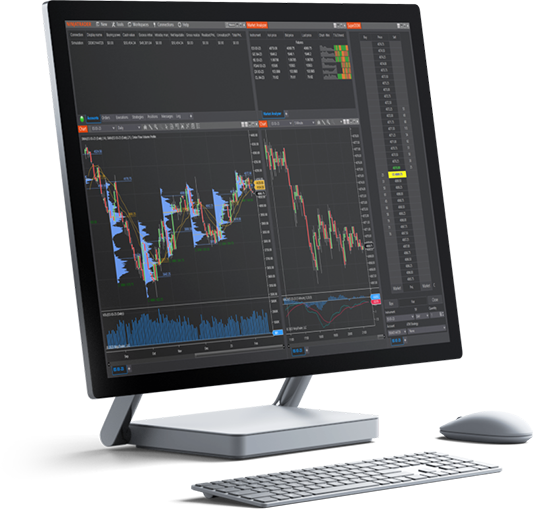
Trade forex futures to capitalize on currency market moves
NinjaTrader offers traders access to all the major foreign currencies traded against the U.S. dollar. Traders can capture potential opportunities in these fast-moving markets using a standard futures or Micro-sized contract for increased flexibility and reduced capital requirements.
- Australian dollar (6A)
- British pound (6B)
- Canadian dollar (6C)
- Euro (6E)
- Japanese yen (6J)
Benefits of Trading Forex Futures vs. Spot Forex and CFDs

Consistent cost to trade
In the forex futures market, traders generally pay a commission per contract, but the true cost of the trade is often expressed in the bid/ask spread, which is set by supply and demand and the available liquidity. Most forex futures markets have good liquidity and consistently tight spreads although market conditions may vary. This ensures that traders can enter and exit forex futures trades efficiently and cost-effectively.
With other currency trading instruments, transaction costs and spreads may be determined by the provider and can vary based on market conditions and execution model and used to help manage the broker’s risk and drive overall profitability. Spot forex and CFD brokers can take the other side of a trade, transition it to a wholesale pool, and lock in a profit. Additional costs associated with spot forex and CFDs may include commissions and overnight financing charges.

Fair and regulated markets
Futures markets and brokers are highly regulated with all transactions generally consolidated at one exchange. The advantage of a centralized exchange is that orders are matched and guaranteed to be settled. In addition, there is full transparency to contract pricing and volume, allowing traders large and small to compete on a level playing field.
Unlike futures, spot forex and CFD trading does not take place on a single centralized exchange and is typically executed through broker-managed environments as they are fragmented across various unrelated forex dealers, often with little or no price and volume cross-reporting. Execution, pricing, and counterparty arrangements in spot forex and CFDs depend on the broker’s model.

Diversification
While some currency trading approaches focus primarily on exchange rates, futures trading offers a more diverse range of products to diversify and capture unique market opportunities. Futures trading offers access to a broad range of global markets, including equity indices, interest rates, metals, energy, agricultural products, and currency futures. This breadth allows traders to diversify across asset classes using a single trading approach.
Features Shared Across Forex, Spot Forex, and CFDs

Flexible trade sizing
Traders can get started with a small account size due to the ability to limit trade sizing. By trading Micro futures contracts, you can trade futures with margins as low as $50 per contract.

24-Hour markets
Like spot forex and CFD trading, forex futures trading offers virtually 24-hour trading with good liquidity in many diverse markets—not just forex—so you can place trades in any market on your schedule.

Make the right choice for your trading goals
Spot forex and CFD trading can involve additional cost considerations such as variable spreads, overnight financing, and broker-dependent pricing, including overnight carrying charges, variable bid/ask spreads and pricing structures that vary by provider.
Forex futures are exchange-traded, centrally regulated, and priced transparently based on buyer and seller activity.for all traders whether big or small. Futures markets are priced based on buyer and seller supply and demand. When choosing between futures trading and spot forex and CFDs, it’s important to have all the facts.
Best Brokerage for Trading Futures

NinjaTrader Is Recognized For Our Unique Combination Of A High-Performance Trading Platform, Discount Pricing, And Real-Time Support
Download our award-winning software. NinjaTrader is always free to use for advanced charting, backtesting and trade simulation.
Recognition
-

2026 #1 Futures Broker
Top Rated Futures Broker - BrokerChooser.com
-

2024 Winner Best Trading Software
Stocks & Commodities Readers' Choice Award
-

2024 Excellence in Futures Education
Benzinga Global Fintech Awards