

FX Futures vs. Forex and CFDs: Understanding market structure and regulation
If you trade in Germany, you are likely familiar with forex and CFDs. These products are widely available through online brokers and often have lower account minimums, which makes them accessible to many traders. As traders gain experience, many begin looking more closely at FX futures vs forex and FX futures vs CFDs to understand how differences in market structure, pricing, and regulation may impact their trading decisions.
FX futures are standardized, exchange-traded contracts, while most forex and CFDs are traded over-the-counter (OTC). In OTC markets, pricing and execution are provided by the broker. By contrast, FX futures trade on centralized exchanges where prices, volume, and order flow are publicly reported. These differences help define how each product behaves in real market conditions.
If you are comparing FX futures vs forex or FX futures vs CFDs, it helps to focus on market transparency, execution model, regulatory oversight, and overall cost, so you can decide what aligns best with your trading goals.
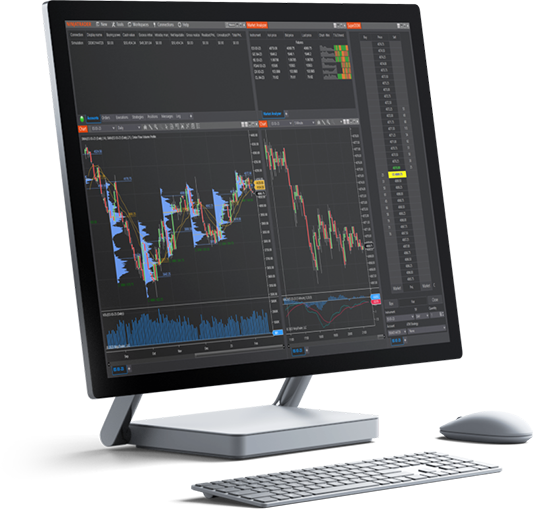
Trade FX futures to participate in global currency markets
Through regulated futures brokers like NinjaTrader Brokerage, you can access major FX futures contracts traded against the U.S. dollar (USD). These contracts are listed on regulated exchanges and cleared through established clearinghouses, providing a structured trading environment..
Available FX futures include:
- Australian dollar (6A)
- British pound (6B)
- Canadian dollar (6C)
- Euro (6E)
- Japanese yen (6J)
You can choose between standard and micro-sized contracts. Micro contracts allow you to size positions more precisely, which can be useful for traders coming from forex or CFDs who want to manage risk or scale into markets with smaller amounts of capital.
If you already trade leveraged products such as forex or CFDs, a lot of this will feel familiar. You’re used to the mechanics of managing risk or scaling into markets with smaller amounts of capital.
Where FX futures differ from forex and CFDs
When evaluating futures brokers, it is important to understand how futures differ structurally from OTC products, like CFDs.

Fair and regulated markets
All listed futures trade on centralized exchanges. Orders are matched in a transparent order book, and trades are cleared through regulated clearinghouses. Pricing and volume data are publicly available to all participants.
By contrast, forex and most CFDs are traded OTC. Pricing is typically provided by the broker, and execution models vary from one provider to another. While OTC markets are accessible and flexible, the pricing model is inherently different from exchange-listed markets.
With exchange-traded futures, price discovery is driven by supply and demand in a centralized marketplace. You trade within a standardized framework rather than against a product designed by an issuer.

Transparent and consistent trading costs
In FX futures, you typically pay a clear commission per contract, plus the bid and ask spread driven by real-time exchange liquidity. This commission-based structure can make it easier to understand exactly what you are paying.
With CFDs and forex, spreads are often set by the broker and overnight financing costs may apply when positions are held beyond one day. If cost transparency matters to you, comparing the total trading cost—commission, spread, and financing—can help clarify the difference between FX futures vs CFDs or FX futures vs forex.

Understanding futures contract structure
FX futures operate within a standardized contract framework defined by the exchange. Each contract has specific specifications, including contract size, tick value, margin requirements, and expiration dates.
For retail traders who are new to futures markets, understanding these elements is important before placing trades. For example, futures contracts may require rolling positions before expiration, and margin requirements can change based on market volatility.
While these structures help create transparent and regulated markets, they can also add complexity compared to some OTC products. Taking time to learn how futures contracts work can help traders manage risk and make more informed trading decisions.

Diversification beyond currency pairs
Futures markets extend far beyond FX products. Through a futures broker such as NinjaTrader, you can access futures products covering:
- Agricultural commodities
- Crude oil and natural gas
- Crypto
- Equity indexes
- FX
- Interest rates
- Metals
If you currently trade CFDs or structured products, futures can complement your strategy with direct exposure to globally recognized benchmark markets.
Features Shared Across Forex, Spot Forex, and CFDs

Flexible trade sizing
Leverage allows you to control a larger notional value with a smaller capital outlay. With Micro futures contracts, you can adjust exposure more precisely.
Margin requirements vary depending on volatility and exchange specifications. Always review current margin requirements before entering a position.

Leverage
FX futures provide leverage based on exchange-defined margin levels. Leverage increases both opportunity and risk.
You remain responsible for managing your exposure. A structured risk management approach, including stop-loss orders and position sizing discipline, is essential.

Nearly 24-hour market access
FX futures trade nearly 24 hours a day during the trading week. This allows you to respond to macroeconomic data, central bank announcements, and global market developments across time zones.

Make the right choice for your trading goals
Trading leveraged products always involves substantial risk. The key question is not only how much leverage you use—but how the product is structured.
Compared to CFDs, exchange-traded futures offer:
- Centralized and transparent pricing
- Standardized contracts
- Regulated clearing
- Clear cost structures
If you prioritize transparent pricing, structured markets, and centralized liquidity, futures may be a strong fit for your strategy. For traders who value flexibility, spread-inclusive pricing, or multi-asset access, forex and CFDs may also have a place. When comparing FX futures vs forex or FX futures vs CFDs, focus on execution quality, pricing transparency, and overall trading conditions—not just access to leverage.
Before trading, ensure the product fits your experience level, financial situation, and risk tolerance.
Best Brokerage for Trading Futures

NinjaTrader Is Recognized For Our Unique Combination Of A High-Performance Trading Platform, Discount Pricing, And Real-Time Support
Download our award-winning software. NinjaTrader is always free to use for advanced charting, backtesting and trade simulation.
Recognition
-

2026 #1 Futures Broker
Top Rated Futures Broker - BrokerChooser.com
-

2024 Winner Best Trading Software
Stocks & Commodities Readers' Choice Award
-

2024 Excellence in Futures Education
Benzinga Global Fintech Awards
When comparing FX futures vs forex, the primary difference lies in market structure and transparency.
FX futures operate within a regulated exchange framework with centralized clearing. However, leverage still amplifies risk. Proper risk management remains essential regardless of product type.
Higher leverage increases both potential gains and potential losses. You should assess leverage carefully in the context of your overall risk profile.
However, CFDs are OTC products and differ structurally from exchange-traded futures. When evaluating FX futures vs CFDs, consider transparency, cost structure, execution model, and regulatory framework before deciding which product aligns with your strategy.
Note: While trading CFDs is currently allowed in the EU, it is not legal to trade CFDs in the U.S. due to strict SEC regulations. In fact, many brokers who specialize in CFDs will not accept U.S. residents as clients. NinjaTrader offers exchange-listed futures as a transparent, regulated alternative to CFDs—providing full price discovery, centralized clearing, and a level playing field for all traders.