What Are E-Mini Dow Index Futures?
E-mini Dow Index Futures are standardized, electronically traded contracts that represent a fractional value of the Dow 30 Industrials index. Known by the contract symbol YM, these futures provide leveraged access to speculate on the price movements of the Dow Jones Industrial Average—one of the world's most actively quoted stock indexes. The YM futures contract is cash-settled and reflects the price-weighted structure of the Dow 30, making it a crucial benchmark for the global economy.
Mastering the YM Futures Chart: Technical Analysis & Strategy
This E-mini Dow trading chart provides a visual representation of the contract's price movements over a specified period. Here are some essential elements to look for on the chart:
Candlestick Patterns: These patterns can indicate potential market reversals or continuations. Look for key formations such as Doji, Hammer, and Engulfing patterns.
Volume: Monitoring trading volume can help identify the strength of a price movement. Higher volume on price increases suggests stronger buying interest, while higher volume on price decreases indicates stronger selling pressure.
Moving Averages: These lines help smooth out price data to identify trends over a specific period. Commonly used moving averages include the 50-day and 200-day moving averages.
Support and Resistance Levels: These horizontal lines indicate price levels where the contract has historically found buying support or selling resistance.
Why Trade E-Mini Dow Index Futures?
High-Level Exposure to the U.S. Economy
The E-mini Dow 30 Index Futures (YM) offer traders a highly liquid, capital-efficient way to gain exposure to the U.S. stock market's performance. The underlying Dow Jones Industrial Average (DJIA) tracks the price of 30 of the largest and most influential U.S. corporations, ranging from Apple to Boeing, making the index a powerful barometer of the global economy.
Direct Trading Benefits
By trading the YM futures contract, you are betting on the combined strength of these sector leaders, allowing you to speculate or hedge against the entire index movement with a single, leveraged instrument. This provides opportunities to react quickly to global economic news and manage market risk effectively.

Key Advantages of Trading the E-mini Dow Futures Contract
Trading E-mini Dow futures offers distinct benefits for accessing one of the world's most influential equity indexes, the Dow Jones Industrial Average (DJIA).
- Market Exposure: The E-mini Dow 30 index futures are based on the DJIA, tracking the combined price of 30 of the largest, most stable U.S. companies. These corporations serve as a crucial barometer for the overall strength of the U.S. stock market and global economy.
- Sector Representation: The Dow 30 includes sector leaders such as Apple, Boeing, Caterpillar, and The Home Depot. Trading the futures contract gives you broad exposure across a wide range of business sectors.
- Leverage and Efficiency: Futures contracts are traded on margin, which creates leveraged exposure. Leverage can amplify both gains and losses and requires careful risk management.
- 24/5 Access: The contract offers global access, enabling traders to respond promptly to international news and opportunities hours before the U.S. stock market opens.
- Portfolio Hedging: Traders can use the YM contract to hedge an equity portfolio against potential broad market declines.
Benefits of trading E-mini Dow index futures include:

Speculate on combined price of 30 large highly influential companies

React quickly to trading opportunities hours before the US stock market opens

Hedge a portfolio of stocks against potential market declines

Flexible contract size to start small with Micro contracts and scale up positions
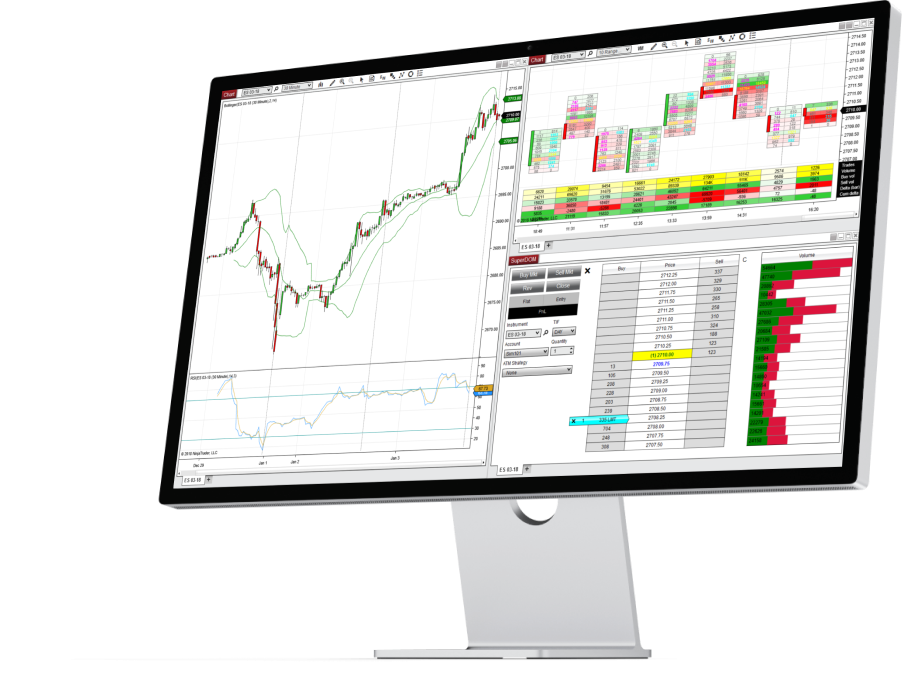
Start Small: The Micro E-mini Dow Futures (MYM) Advantage
At 1/10th the size of the standard E-mini contract, Micro Dow E-mini futures allow traders to access the highly liquid equity index futures markets with reduced costs and margins as low as $50. Other advantages of trading these bite-sized contracts include:
- Access to the most popular and liquid futures contracts
- Highly leveraged investment for more buying power*
- Reduced financial commitment vs. the full-size Dow E-mini contract
- Increased flexibility for better position management
Micro E-mini futures contracts provide an ideal entryway for new futures traders to start small and scale up as you become more comfortable in the live markets.
*Leverage also increases the risk associated with futures trading and only risk capital should be used for trading

Who trades E-mini Dow index futures?
Participants in the E-mini Dow index futures market can be segmented into three main groups based on their trading objectives:
Commercial Traders (Hedgers): These traders utilize index futures primarily to hedge their price risk on an extensive portfolio of underlying stocks. They are typically institutional investors, such as large banks, pension funds, mutual funds, or major corporations, seeking to protect their existing holdings from adverse market movements.
Large Professional Speculators: These individuals or entities engage in futures trading with the sole objective of purely speculating on the direction and price movement of the futures contract itself. They do not hold the underlying physical asset but aim to profit from correctly forecasting market trends.
Self-Directed Retail Traders (Small Speculators): These traders, like the large professional speculators, typically enter the E-mini Dow index futures market for the purpose of speculating on the contract's price movement. They represent the smaller segment of daily volume, executing trades independently through online platforms.
The Commodity Futures Trading Commission produces a weekly report showing the open net positions for these three types of traders called the Commitment of Trader's report.
What Impacts The Price Of E-Mini Dow Index Futures?
Although the E-mini Dow index futures market is made up of only 30 stocks, prices can fluctuate greatly during the trading day and can be sensitive to economic news and earnings reports. There are several factors that can influence the price of a major market stock index like the Dow futures. For example, changes in economic conditions can turn market sentiment bullish or bearish on a dime. Additional factors include:
Macroeconomic Factors
Economic indicators such as GDP growth, inflation rates, and employment data can have a significant influence on market sentiment and investor confidence. Positive economic data, such as strong GDP growth or declining unemployment rates, can drive prices for the E-mini S&P 500 index futures higher; negative economic data can lead to a decline in prices as investors become more cautious and risk-averse.

Interest Rates and Fed Policy
Changes in interest rates and monetary policy decisions can also impact the price of Dow 30 index futures. When interest rates are low, they can stimulate borrowing and investment, which tend to boost stock prices. On the other hand, when interest rates rise, borrowing becomes more expensive, potentially reducing economic activity and causing stock prices to decline.

Watch Daily Live Futures Trading
Join our livestreams each weekday as we prepare, analyze and trade the futures markets in real-time using charting and analysis tools.
Intro To Technical Analysis
Learn to leverage technical analysis to target futures trading opportunities and identify trends using chart types, indicators and more.

Develop The Trader In You
Get started on your path to learn how to trade futures through our introductory video series outlining the first steps in your trading journey.
Risks of E-mini Dow Index Futures Trading
Similar to other equity index futures contracts, the primary risk of trading E-mini Dow Index futures is that the price will go against the trader’s position. Using appropriate trade sizing for your account size and having a robust risk management plan includes stop losses or a trailing stop can help to limit your financial exposure.
With many factors that can influence short-term and long-term performance, keeping abreast of economic activity is key here, as news and events—like changes in interest rates, economic reports, and changes in US central bank (Fed) policy—can move the major stock market indexes significantly.
Tips to keep in mind especially for newer futures traders include:
- Practice in a futures trading simulator that reflects live market conditions until you prove to yourself that you are comfortable with the market swings. Then, when you start trading with real dollars, trade small to start, and work your way up.
- Build a well-defined futures trading plan including clear entry and exit criteria, analysis of market conditions and a schedule for when you are and are not going to trade.
E-Mini Dow Futures Contracts Specifications
The E-mini Dow index futures contracts are standardized exchange-traded contracts that represent the value of 30 of the largest stocks traded in the US. The value for a 1 point move in the standard contract is $5 or $.50 for the 1/10 size micro contract.
Retail traders typically buy and sell E-mini Dow index futures contracts to speculate if the price will go up or down. Major market index futures contracts are cash settled at expiration.
| Standard [Asset] Futures | Micro [Asset] Futures | |
|---|---|---|
| Symbol | YM | MYM |
Exchange | CME Globex | CME Globex |
| Contract point value | $5 USD | $0.50 USSD |
| Minimum price fluctuation | 1, (5 * 1 = $5.00 per contract per-minimum move) | 1 (.50 * 1 = $0.50 per-contract per-minimum move) |
| Trading hours | Sunday 6:00 p.m. ET to Friday 5:00 p.m. ET | Sunday 6:00 p.m. ET to Friday 5:00 p.m. ET |
| Listed contracts | Quarterly: March(H), June(M), September(U), December(Z) - 9 Quarters Out and 3 Additional December Contracts. | Quarterly: March(H), June(M), September(U), December(Z) - 5 Quarters Out |
| Expiration style | 3rd Friday of every listed contract month | 3rd Friday of every listed contract month |
| First notice date | Not applicable | Not applicable |
| Settlement | Financially settled | Financially settled |
| Additional Specifications | View all from CME Group | View all from CME Group |

Become A E-mini Dow futures trader today
Ready to start trading E-mini Dow futures or Micro E-mini Dow futures? NinjaTrader is here to support you. With award-winning features and daily premium market commentary with industry pros, NinjaTrader equips you with the tools you need to embark on your trading journey.