
What are single stock futures?
In short: single stock futures give you a cleaner, more capital-efficient way to trade the individual stocks you already follow. Security futures trading involves substantial risk and is not suitable for everyone.
Single stock futures vs. trading the underlying stock
Single stock futures differ from buying shares because they offer built-in margin efficiency, frictionless shorting without a share borrow, and nearly 24-hour trading—so traders can react to earnings, product launches, and overnight news in real time.
When you trade the underlying stock, you pay the full share price (or carry margin debt from your broker). When you trade futures vs. stocks, your initial outlay is the futures margin requirement, which is typically a fraction of the notional value. That capital efficiency can let you allocate the same capital across more positions, or simply keep more of your powder dry.
For traders who already have a strong view on individual names, single stock futures offer a structurally simpler, more leveraged path to expressing that view. While single stock futures may require less initial capital than purchasing the underlying shares, leverage increases both potential gains and potential losses.
Single stock futures vs. options on stocks
Single stock futures differ from equity options because they have no Greeks, no time decay, and a linear payoff that moves directly with the underlying stock—making them a simpler way to express a directional view on a specific stock.
Options strategies can be powerful, but they come with real complexity: you have to choose a strike, manage theta decay, and account for implied volatility moves that can work against you even when you're right on direction. Futures vs. stock options is a comparison worth making before you decide on your instrument of choice.
With a single stock future, your P&L tracks the stock price movement dollar for dollar (adjusted for contract size). There's no time value to erode, no volatility surface to model—just a position that goes up when the stock goes up (long) or down when the stock goes down (short).
If you want a directional trade on a stock and don't need the asymmetric payoff of options, single stock futures are the more straightforward tool.
How single stock futures work on NinjaTrader
Single stock futures on NinjaTrader trade through CME Group's Globex platform with the same workflow you already use for index futures. Place a buy order to go long, or place a sell order to go short—no share borrow, no uptick rule, no separate short-selling application.
Contract size, settlement, and expirations
Single stock futures list in two sizes. A standard contract represents 100 shares of the underlying stock; a micro contract represents 10. Other key contract terms are generally the same, including trading hours, settlement, quarterly expiration cycles, and margin rates as a percentage of notional value. The primary difference is contract size.
If you already trade Micro E-mini futures, the pairing will look familiar. It’s the same logic that runs through micro futures contracts across the futures markets: one contract at full size, one at a tenth of it, and you pick per trade. Notional value and tick value scale with the contract, so a micro carries a tenth the notional of the standard contract and a tenth the value per tick.
On a stock trading at $200, a standard contract carries $20,000 of notional value and a micro carries $2,000. Before your first trade, review the contract specifications on CME Group’s website or within the NinjaTrader platform to confirm the size, settlement, and expiration terms for the name you want to trade.
Margin and capital efficiency
Futures margin is not a loan—it's a good-faith deposit that gives you full price exposure to the contract. Initial margin requirements for single stock futures vary by name and are set by the exchange. Because margin scales with the notional value of the contract, a micro carries a tenth the notional of a standard contract and may require roughly a tenth the margin, depending on applicable margin requirements. A smaller requirement means smaller exposure, not less risk per dollar committed. Intraday margin rates on NinjaTrader can be lower than overnight margin, giving active traders additional flexibility during the trading session. Review current requirements on the margins and position management page, and see our primer on using margin in futures trading for a deeper look at how leverage works.
Nearly 24-hour trading hours
Single stock futures trade nearly 24 hours a day, five days a week on CME Group's Globex platform. That means earnings releases, product announcements, and macro events that hit overnight don't just affect you at the next morning's open; you can respond to them as they happen. This is one of the sharpest contrasts with equity trading, which keeps you waiting until the market reopens.

Reasons Traders Consider Single Stock Futures
The rise of high-volatility individual names—and the dominance of a handful of megacap stocks in driving overall market moves—has made single-name exposure increasingly attractive for many traders. Single stock futures give traders a direct, leveraged handle on those names without the complexity of options or the capital drag of buying shares outright.
- Focused exposure to the names driving market volatility: When the market moves on Nvidia's earnings or Apple's product launch, broad index futures like the E-mini S&P 500 only capture a fraction of that single-stock move. Single stock futures let you concentrate your thesis on the specific name you have a view on, rather than absorbing the noise of 499 other companies. Think of them as a precision instrument next to the blunt force of an index.
- Go long or short with one click, no share borrow required: In equity markets, shorting a stock requires your broker to locate and lend you shares—a process that can be restricted, expensive, or simply unavailable for hard-to-borrow names. With single stock futures, going short is identical to going long: one order, one contract. There's no borrow fee, no short squeeze from a recall, and no uptick rule. This structural symmetry is one of the main reasons many traders drawn to equity index futures are now extending that approach to individual names.
- Simpler than options: no Greeks, no time decay: Options are powerful, but managing a book of options positions means tracking delta, adjusting for theta, and accounting for implied volatility changes that can move your P&L even when your directional call is right. Single stock futures strip all of that away. Your position moves linearly with the stock. No expiration timing strategy. No volatility crush after an event. If the stock goes up $5, a standard contract representing 100 shares shows an unrealized gain of $500, and a micro representing 10 shares shows $50, before commissions.
Which stocks can you trade as single stock futures?
CME Group lists single stock futures on more than 50 of the most actively traded U.S. equities. Coverage spans the S&P 500, Nasdaq 100, and Russell 1000, weighted toward high-volume, high-volatility names that futures traders are most likely to want direct exposure to.
Coverage from the S&P 500, Nasdaq 100, and Russell 1000
The available universe includes many of the marquee names in technology, semiconductors, energy, and financials—companies like Amazon, Apple, Meta, Nvidia, Tesla, and others where individual stock moves routinely outpace the broader indices. The full list of available contracts is maintained by CME Group and updated periodically; check NinjaTrader's platform or CME Group's website for the current lineup.
Trading around earnings, product launches, and overnight news
Earnings season creates some of the most dramatic single-stock price moves of the year. With single stock futures, you can enter or exit a position before, during, or immediately after an earnings release—not just at the next morning's open. The same applies to Fed announcements, macro data releases, or any overnight headline that moves the stock you're watching. Nearly 24-hour access means you're never forced to wait for the bell.
If there's a name you follow closely and trade regularly, there's a good chance it's available as a single stock future.
Practice Single Stock Futures Risk-Free In Sim
NinjaTrader’s trading simulator lets you trade single stock futures with live market data in a simulated environment—no real capital at risk. Sim trading can be a great way to get comfortable with single stock futures before you go live: test your entry and exit workflow, understand how margin requirements behave, and see how single-name contracts respond to market events, all without putting a dollar on the line. It’s also one of the cleanest ways to compare the two contract sizes directly—run the same setup in a standard contract and in a micro before you commit capital.
Because the NinjaTrader sim environment runs on live market data, the experience mirrors live trading conditions as closely as possible.
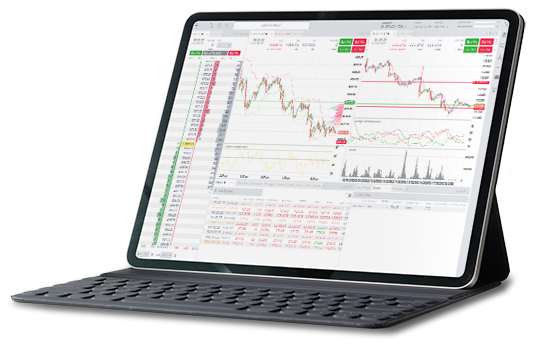
A simulated trading environment allows traders to gain hands-on experience with single stock futures and build familiarity with their mechanics before transitioning to live markets.

How To Start Trading Single Stock Futures With NinjaTrader
Getting started trading single stock futures takes a few steps. Here's the short version—see our pricing overview for account minimums and commission details.
- Open a free NinjaTrader account. No minimum deposit* required to get started with sim trading.
- Practice in sim. Use the simulated environment to trade single stock futures with live market data until you're comfortable with the mechanics.
- Fund your account. When you're ready to go live, fund your NinjaTrader brokerage account and review our margins and position management page to confirm requirements for the contracts you want to trade.
- Trade single stock futures on desktop, web, or mobile. NinjaTrader's platforms give you the same tools and access across devices—including advanced charting, Order Flow+, and direct execution on CME Group's Globex.
*ACH and debit card transfers are subject to a $5.00 minimum.
FAQs on single stock futures
Single stock futures (SSFs) are CME Group-listed futures contracts that track the price of an individual publicly traded stock. They let traders take a leveraged long or short position on a single company—like Apple, Microsoft, or Nvidia—using the futures framework rather than buying shares or trading equity options. Contracts list in two sizes: a standard contract represents 100 shares of the underlying stock, and a micro contract represents 10.
A micro single stock future is the smaller of the two contract sizes CME Group lists on an individual stock. It represents 10 shares of the underlying, where a standard contract represents 100. Availability varies by name, so check CME Group’s listings or the NinjaTrader platform for the current lineup.
The primary difference is size. A standard contract represents 100 shares of the underlying stock, while a micro represents 10. Notional value and tick value scale accordingly, so a micro has one-tenth the notional value and tick value of the corresponding standard contract. Applicable margin requirements are also generally lower for the micro contract. Standard and micro contracts generally share the same trading hours, settlement terms, and quarterly expiration cycles. The different contract sizes provide traders with additional flexibility when sizing a position.
Single stock futures have no time decay, no Greeks, and a linear payoff that moves directly with the stock price. Options derive value from a combination of intrinsic value and time value, which decays as expiration approaches. With a single stock future, your P&L tracks the stock dollar for dollar (adjusted for contract size), making directional trading more straightforward than managing an options position.
Yes. Going short a single stock future requires the same one-click process as going long—no share borrow, no borrow fee, and no restrictions on hard-to-borrow names. This structural symmetry is one of the main advantages of trading single stock futures versus shorting shares in an equity account.
CME Group lists single stock futures on more than 50 actively traded U.S. equities, including many top names from the S&P 500, Nasdaq 100, and Russell 1000. The available universe includes major technology, semiconductor, energy, and financial stocks. Check CME Group's current contract listings or NinjaTrader's platform for the full, up-to-date list.
Single stock futures trade nearly 24 hours a day, five days a week on CME Group's Globex. This gives you the ability to react to earnings releases, macro data, and overnight news events as they happen—rather than waiting for the equity market to open the next morning.
Yes. Single stock futures expire on a quarterly cycle—typically in March, June, September, and December. Most traders close their positions before expiration rather than holding through settlement. Contract specifications vary by name and can be confirmed in the platform or on CME Group's website.
Yes. NinjaTrader is a CFTC-regulated futures brokerage and NFA member that supports single stock futures trading across desktop, web, and mobile, with the same low commissions and intraday margins traders already use for index futures. Both contract sizes are supported, and you can trade them through the same NinjaTrader account you use for E-mini S&P 500, Micro E-mini, or other futures contracts.
Yes. NinjaTrader's trading simulator supports single stock futures with live market data in a risk-free simulated environment. You can practice your full workflow—entries, exits, order types, and margin management—before committing real capital.
Trading single stock futures involves substantial risk of loss and is not appropriate for all investors. Because these contracts are leveraged, losses can exceed your initial margin deposit. Single stock futures can be affected by company-specific events such as earnings surprises, dividend announcements, and corporate actions, as well as broader market volatility. Liquidity can vary by contract, and wider bid-ask spreads may increase trading costs. Unlike equity accounts, futures accounts are not covered by SIPC protection. Traders should carefully consider their risk tolerance, understand margin requirements, and use risk management tools such as stop-loss orders before trading. Past performance is not indicative of future results.
Simulated trading does not represent actual trading and is based on hypothetical conditions. Actual trading results may differ significantly due to factors such as market conditions, liquidity, execution, and the emotional and psychological impact of risking real money. Simulated trading is provided for educational and platform-familiarization purposes only and should not be relied upon as an indication or expectation of results in a live trading environment.
Learn more about security futures products by reviewing the Risk Disclosure Statement for Security Futures Products.