Five technical indicators futures traders in 2026 should know are moving averages, RSI, MACD, VWAP, and Bollinger Bands—each measuring a different aspect of price behavior including trend direction, momentum, and volatility.
Whether you're new to futures or building out your first real setup, indicators give you a structured way to read the market. Instead of reacting to raw price bars, you have tools—each measuring something specific—that can help you make sense of what's happening and why.
This guide breaks down all five in plain language: what each one measures, how to use it, and how they work together. If you're specifically focused on short-term trading, check out 5 key indicators for day trading futures—day traders often rely on a slightly different setup than the all-purpose toolkit covered here.
What are technical indicators and why do futures traders use them?
Technical indicators are mathematical calculations applied to price, volume, or time that can help traders identify patterns, trends, and potential turning points. Technical indicators don't predict the future, but they can give you a repeatable framework for reading the market instead of reacting to it.
If you're just getting started, futures trading basics is worth a read before going deeper.
How indicators can help you read price action
Raw price charts can be noisy. A single session might include sharp spikes, reversals, and consolidation, all within a few hours. Indicators can help filter that noise, surfacing the underlying structure so you can trade with more clarity and less second-guessing.
Leading vs. lagging indicators: a quick explainer
Leading indicators attempt to signal what price might do next. Lagging indicators confirm what price is already doing. Most of the five indicators in this guide are lagging; they follow price rather than predict it, which makes them better for confirming a trend than for calling a reversal from scratch.
Knowing the difference can shape how you use each tool and keep you from expecting it to do something it wasn't built for. Think of lagging indicators as tools for staying aligned with the market, not for timing perfect entries.
Indicator quick-reference table
| Indicator | Category | What it measures | Beginner difficulty |
|---|---|---|---|
| Moving average | Trend | Direction and strength of a trend | ⭐ Easy |
| RSI | Momentum | Speed and magnitude of price changes | ⭐⭐ Moderate |
| MACD | Trend / momentum | Trend shifts and momentum divergence | ⭐⭐ Moderate |
| VWAP | Volume | Average price weighted by volume | ⭐ Easy |
| Bollinger Bands | Volatility | Price range relative to recent volatility | ⭐⭐ Moderate |
Moving average: the first indicator every futures trader should learn
A moving average smooths price data over a set number of periods, making it easier to see the direction of a trend without getting distracted by short-term noise. It's typically the first indicator traders learn—and one they never stop using.
Simple moving average vs. exponential moving average
The simple moving average (SMA) gives equal weight to every price point in its lookback window. The exponential moving average (EMA) gives more weight to recent prices, so it reacts faster to new information. In the fast-moving environment of futures markets, many traders prefer the EMA for that responsiveness.
How to use moving averages to spot a trend in action
When price consistently trades above a moving average, the market is in an uptrend. When it consistently trades below, the bias is bearish. A popular tactic is watching for crossovers between a shorter-term and a longer-term moving average—when the faster one crosses above the slower one, it can signal the early stages of an uptrend.
"Moving averages tell you the direction of the road, not the speed of the car. Paired with a momentum tool like RSI, they give you a much more complete picture of whether a trend has legs."
RSI: the momentum indicator that tells you when a move is losing steam
The RSI (relative strength index) indicator measures momentum on a scale of 0 to 100. In futures markets, readings above 70 are typically considered overbought, and readings below 30 are considered oversold, helping traders identify potential reversals.
The RSI uses a 14-period lookback by default and is one of the most widely cited tools in technical analysis.
What "overbought" and "oversold" mean in futures markets
"Overbought" doesn't mean price will reverse immediately; it means buying pressure has been intense and a pullback is more likely. In strong trending markets, RSI can stay above 70 for extended stretches. It's most useful as context, not as a standalone trigger.
Using multiple indicators in combination—such as a moving average for trend direction and RSI for momentum confirmation—can help futures traders reduce false signals and build more reliable entry criteria.
The RSI becomes especially powerful when it diverges from price. If price makes a new high but RSI makes a lower high, that's a classic warning sign that the move may be running out of steam.
MACD: how to spot trend shifts with one indicator
The MACD (moving average convergence/divergence) indicator tracks the relationship between two exponential moving averages—typically a 12-period and a 26-period—and plots the difference as a line alongside a 9-period signal line. When the two lines cross, it often signals a shift in trend direction.
Reading MACD crossovers as entry and exit signals
A bullish crossover happens when the MACD line crosses above the signal line; many traders use this as a potential entry cue in a confirmed uptrend. A bearish crossover signals the opposite and can indicate a time to exit or consider a short position. The histogram bars between the lines show the distance between them, giving you a live read on how strong or weakening that momentum is.
The MACD and RSI complement each other naturally: MACD for spotting trend shifts, RSI for confirming whether momentum supports them.
VWAP: the institutional benchmark for fair value
VWAP (volume-weighted average price) is one of the most widely used futures trading indicators because it shows the average price at which a contract has traded throughout the day, weighted by volume—giving traders a benchmark to gauge whether price is trading at a fair level.
Why futures traders treat VWAP as a dynamic support and resistance level
When price trades above VWAP, the session has a bullish bias and buyers are paying above the day's average; below VWAP, a bearish bias. Many professional traders use it as a decision line: look for long setups above it, short setups below it. That makes VWAP one of the more intuitive indicators for beginners to start with, especially when trading contracts with low intraday margins like Micro E-mini futures.
Because VWAP resets at the start of each trading session, it's most relevant for intraday traders. Pair it with a moving average for a clearer read on how price fits into the broader trend.
Bollinger Bands: your visual guide to market volatility
Bollinger Bands consist of three lines: a simple moving average in the middle, flanked by two bands set at standard deviations above and below it. When volatility expands, the bands widen. When volatility contracts, they tighten.
What a "squeeze" signals before a big move
A Bollinger Band squeeze—when the bands narrow significantly around price—often precedes a sharp directional move. It doesn't tell you which way price will break, but it signals that a breakout is building. Most traders wait for a confirmed break before entering.
"The squeeze is one of the most actionable setups Bollinger Bands produce. Add MACD or volume context to gauge whether the breakout has real conviction or is likely to fade."
How to combine these 5 indicators without overcomplicating your charts
More indicators don't equal better trading. The goal is to use tools that measure different things—trend, momentum, volume, volatility—so they confirm each other rather than echo the same signal.
A practical starting combination: use a moving average to define the trend, RSI to gauge momentum, and VWAP to identify potential entry areas. Add MACD for confirmation on trend shifts and Bollinger Bands when you're watching for a breakout setup.
Beginner tip: Start with one indicator at a time. Learn what it's telling you before layering in a second.
NinjaTrader's trading platform includes 100+ built-in technical indicators, including moving averages, RSI, MACD, VWAP, and Bollinger Bands, allowing futures traders to apply and customize these tools directly on their charts. You can practice using all of them risk-free with the NinjaTrader trading simulator before ever placing a live trade.
Simulated Trading Disclosure
Simulated trading is hypothetical and does not reflect actual trading or real-world results.
For more on building out your setup, see how to choose your technical indicators, top 5 trading indicators you should know about, and—if you're trading on longer timeframes—5 essential indicators for swing trading futures.
Start putting these indicators to work
Moving averages, RSI, MACD, VWAP, and Bollinger Bands give you a well-rounded foundation for reading the futures market—covering trend, momentum, volume, and volatility in a single toolkit. The real learning happens when you apply them to live charts, watch how they behave across different conditions, and develop a feel for when they're giving you signal versus noise.
NinjaTrader's platform has all five indicators built in, so you can start exploring them the moment you open an account.
Create Your NinjaTrader Account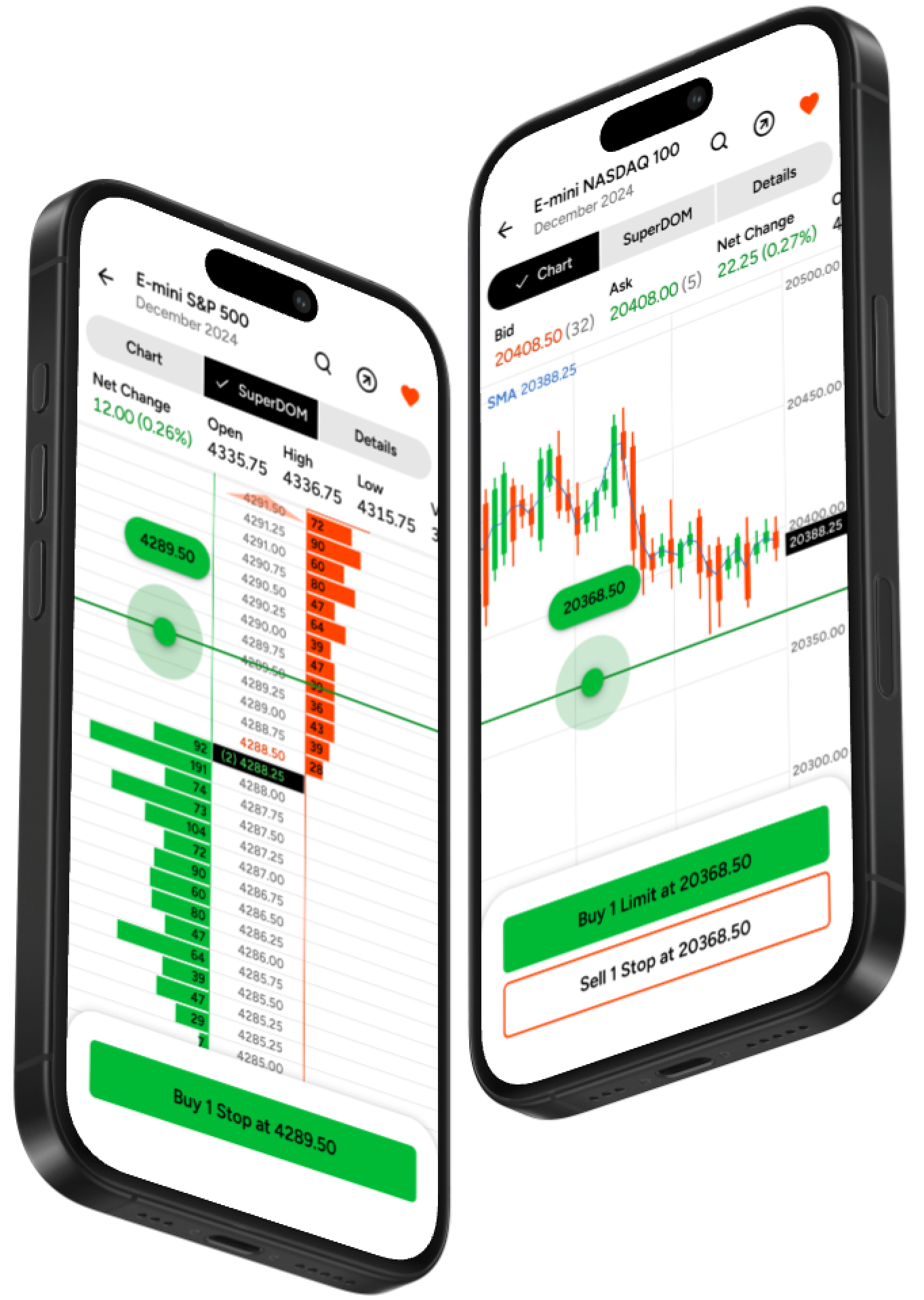
FAQs on futures trading indicators
There's no single best indicator; it depends on your strategy and timeframe. Moving averages and VWAP are strong starting points for beginners because they're straightforward to interpret and widely used by professional traders.
Yes. Most technical indicators work across asset classes. That said, futures markets have unique characteristics—like session-based VWAP resets and distinct volume profiles—that affect how indicators behave, so it's worth understanding those differences.
Start with one or two. Stacking too many indicators creates conflicting signals and makes it harder to develop real conviction in any setup. Master a single indicator before adding another.
The NinjaTrader platform includes 100+ built-in technical indicators—including all five covered in this guide—so you can apply and customize them directly on your charts with no additional add-ons required.